


The Legacy of Resilience: Honoring Black History Through Entrepreneurship
- Taylor Made Training-Consulting
- Feb 2
- 5 min read

February isn't just a time to remember history: it's a time to recognize the living, breathing legacy of resilience that continues to shape how we build, lead, and thrive today. As we kick off Black History Month, let's talk about something that hits close to home for anyone navigating the world of business: Black entrepreneurship.
This isn't just a history lesson. It's a blueprint for resilience, creativity, and determination that connects directly to what we do at TM Training and Consulting: empowering leaders (especially women) to build businesses and careers rooted in purpose, strength, and authenticity.
A Scripture for the Journey
"For I know the plans I have for you," declares the Lord, "plans to prosper you and not to harm you, plans to give you hope and a future." : Jeremiah 29:11
This verse reminds us that even in the face of overwhelming obstacles, there's a path forward. Black entrepreneurs throughout history have embodied this truth: turning systemic barriers into stepping stones and creating prosperity against all odds.

From Emancipation to Economic Independence
Here's where the story begins: immediately after emancipation, newly freed Black Americans didn't wait for permission or opportunity to be handed to them. They created it.
During the Reconstruction Era (1865-1877), formerly enslaved people rolled up their sleeves and built the foundation of Black entrepreneurship. They opened:
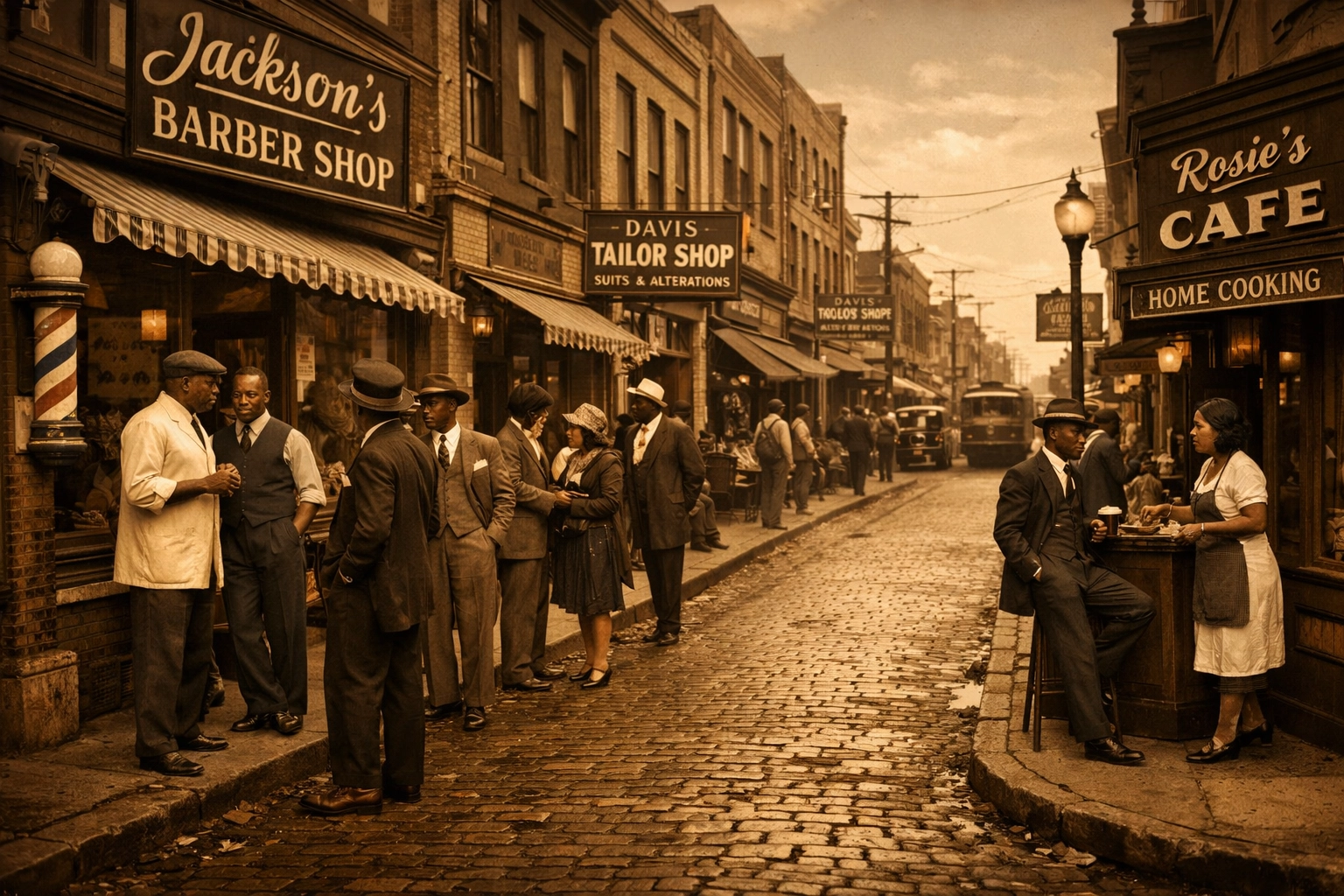
Barbershops and beauty salons that became more than just service businesses: they were gathering places
Tailoring shops and restaurants that met community needs
Small farms that provided food security and economic stability
These weren't just businesses. They were safe spaces in a deeply segregated society. They were acts of defiance and declarations of independence. And they worked.
The Golden Age: When Black Wall Streets Rose
Between 1900 and 1930, something extraordinary happened. Black-owned businesses didn't just survive: they thrived. This period, known as the Golden Age of Black entrepreneurship, saw the rise of thriving Black business districts across the country.
You've probably heard of the Greenwood District in Tulsa, Oklahoma: often called "Black Wall Street." But did you know there were similar hubs in Durham, Chicago, and Richmond? These communities featured:
Black-owned banks
Insurance companies
Newspapers
Retail stores
Restaurants and entertainment venues
Here's the thing that might surprise you: Jim Crow laws, while deeply oppressive, paradoxically created insulated communities where Black entrepreneurs could build without white competition. They turned segregation: a tool of oppression: into an opportunity for economic self-determination.
Pioneers Who Paved the Way
Let's talk about some names you need to know:
Robert Reed Church became the South's first Black millionaire through real estate investments in Memphis, Tennessee. He didn't stop at personal wealth: he founded the region's first Black-owned bank, creating financial infrastructure for his community.
Annie Malone broke ground as the first Black female millionaire and a pioneer in the Black hair care industry. She built an empire by recognizing an underserved market and creating products specifically for Black women's hair. Her success wasn't just about profit: she employed thousands of Black women and gave generously to educational institutions.
These weren't exceptions. They were examples of what happens when talent, determination, and necessity collide with opportunity.
The Power of Necessity-Driven Innovation
Here's a truth that resonates today: segregation and discrimination barred Black Americans from accessing certain services and products, so they created their own.
Think about that for a moment. When the door is slammed in your face, you don't just knock louder: you build your own door, your own house, your own neighborhood.
This necessity-driven innovation is a defining characteristic of Black entrepreneurship across generations. It's about:
Identifying gaps in the market (especially in underserved communities)
Turning practical creativity into economic empowerment
Building businesses that serve dual purposes: profit and community uplift
Creating opportunities where systems said there were none

The Obstacles Were Real (and Systemic)
Let's be honest about what these entrepreneurs faced. The barriers weren't just inconvenient: they were intentional and systemic:
Zero inherited wealth to use as startup capital
Limited access to education and business training
Redlining that prevented expansion beyond segregated communities
Restricted access to loans and capital from mainstream financial institutions
Violence and intimidation for those who became too successful
Despite all this, Black entrepreneurs built businesses, created jobs, and accumulated wealth. That's not just business savvy: that's resilience.
The TMTC Connection: Why This History Matters to Your Leadership
At TM Training and Consulting, we're in the business of empowering women leaders to build sustainable, impactful businesses and careers. When we look at the history of Black entrepreneurship, we see principles that align perfectly with our mission:
Turning obstacles into opportunities. Just like those early Black entrepreneurs, you're navigating challenges: whether it's breaking into male-dominated industries, balancing multiple roles, or building businesses without traditional support systems.
Creating from necessity. Many of the women we work with start businesses because they see gaps: in their industries, their communities, or their own career trajectories. That's not a weakness; it's a powerful motivation.
Building with purpose beyond profit. Those historical Black businesses weren't just about making money: they were about uplifting communities. Your leadership can do the same.
Resilience as a competitive advantage. The ability to pivot, adapt, and persist is what separates good leaders from great ones. It's in your DNA, especially if you're building from a place where traditional paths weren't available.

From Then to Now: The Legacy Continues
Today's Black entrepreneurs are carrying the torch forward: from tech founders disrupting Silicon Valley to beauty entrepreneurs building billion-dollar brands, from street vendors evolving into shop owners to social enterprises addressing community needs.
The challenges have evolved, but the resilience remains. Access to capital is still a barrier. Systemic biases still exist in lending, networking, and market access. Yet Black entrepreneurship continues to grow, with Black women leading the charge as the fastest-growing segment of entrepreneurs in America.
That's the legacy we're honoring this month.
What This Means for You
Whether you're Black, white, or any other background, there's something powerful to learn from this history:
Resilience isn't optional in business: it's essential. The most successful leaders aren't those who never face obstacles; they're the ones who transform obstacles into opportunities.
Your community is your competitive advantage. Those early entrepreneurs built businesses that served and uplifted their communities. Who are you serving? How does your work create ripples beyond your bottom line?
Innovation often comes from necessity. If you're feeling stuck or like traditional paths aren't working for you, good. That frustration might be the catalyst for your most creative solution.
Your story matters. The entrepreneurs we've discussed today didn't just build businesses: they created legacies. What legacy are you building?
Let's Keep Building
As we move through Black History Month, we'll continue exploring these themes: each week bringing new insights into how Black entrepreneurship shapes business today and how you can apply these lessons to your own leadership journey.
For now, take a moment to reflect: What barriers are you facing that could actually be opportunities in disguise? What would it look like to approach your business or career with the same resilience and creativity as those pioneers who built from nothing?
At TMTC, we're committed to helping you find those answers. Because honoring history isn't just about looking back: it's about using those lessons to build forward.
Here's to the legacy of resilience. Here's to building businesses that matter. Here's to you.
Ready to explore how these principles can transform your leadership? Connect with us and let's talk about empowering your next chapter.


Comments